01
The solar surplus is the electricity produced but not consumed immediately
In this article
02
It can be self-consumed, stored, sold, or shared
03
An energy community allows you to share this surplus with your neighbors
Valuing your excess energy, easy?
You have installed photovoltaic panels and your system sometimes produces more electricity than you consume?
This excess electricity constitutes your solar surplus.
Rather than letting all this energy be fed into the grid, several solutions exist:
- increase your self-consumption,
- store the electricity in a battery,
- revendre son surplus à un fournisseur
- or share it with other consumers through an energy community.
In this article, discover what a solar electricity surplus really is, what solutions are available, and how WattUnity facilitates energy sharing between producers and consumers.
What is a solar electricity surplus?
The solar electricity surplus corresponds to the energy produced by your photovoltaic panels that is not consumed immediately in your home or business.
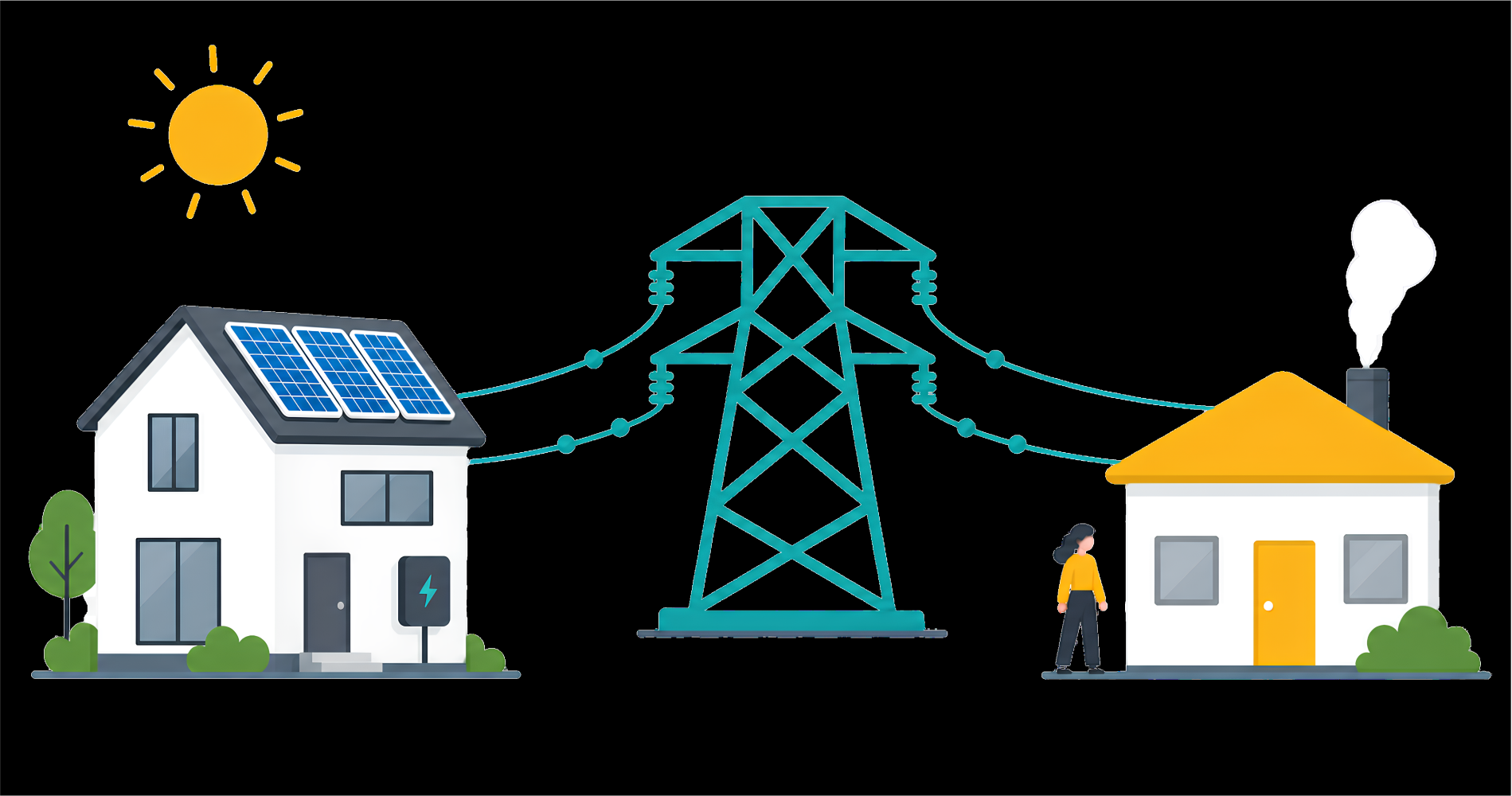
Solar panels primarily produce during the day. However, a household's electricity consumption is often higher in the morning, at the end of the day, or in the evening. There can therefore be a gap between when electricity is produced and when it is consumed.
When production exceeds instantaneous consumption, the remaining electricity becomes a photovoltaic surplus. It can then be stored, fed into the grid, sold, or shared with other consumers.
A concrete example:
At 1 PM, your solar panels produce 5 kWh. At the same time, your home consumes 2 kWh.
- 2 kWh are consumed directly on site;
- 3 kWh make up your solar surplus;
- these 3 kWh can be stored, sold, or shared.
The surplus therefore depends on the difference between the amount of electricity produced and the amount of electricity consumed at the same time.
What is the difference between self-consumption and solar surplus?
Self-consumption refers to the solar electricity consumed directly at the moment it is produced. This can include, for example, the electricity used by your washing machine, your heat pump, your water heater, or your charging station.
The surplus corresponds to the part of the production that remains available after this immediate consumption.
Self-consumption is therefore the solar electricity used directly by the producer. The solar surplus is the electricity produced but not consumed immediately. When this electricity is sent to the grid, it is referred to as injection.
What to do with your solar electricity surplus?
Increase your self-consumption
The first solution is to consume more electricity at the time when the panels produce. You can, in particular:
- schedule your electrical appliances during the day;
- charge your electric car when solar production is high;
- run your heat pump or water heater during sunny hours;
- install a consumption management system.
The goal is to directly consume a larger portion of the electricity produced by your panels.
Store electricity in a battery
A home battery allows you to keep some of the solar surplus for later use, for example in the evening or during the night.
This solution can increase your self-consumption rate. However, it requires an initial investment and necessitates choosing a system suited to your production and consumption.
Sell your surplus to an energy supplier
You can also sell your solar surplus to an energy supplier. In this case, the unused electricity is injected into the grid and compensated according to the terms outlined in your injection contract.
The buyback price depends notably on the supplier, the signed contract, and market conditions. This solution is simple, but it does not always allow for the best valuation of locally produced energy.
Share your surplus with your neighbors
Energy sharing allows you to make your photovoltaic surplus available to other consumers. This can include neighbors, occupants of the same building, local businesses, or members of an energy community.
Shared electricity travels through the existing electrical grid. The quantities are then calculated based on meter data and according to the rules defined for the project.

What is an energy community?
Une communauté d’énergie est un regroupement de participants qui s’organisent pour produire, consommer, partager, stocker ou gérer de l’électricité, généralement à l’échelle locale.
It brings together renewable electricity producers and nearby consumers. The goal is to promote local use of solar energy and better value photovoltaic surpluses.
In an energy community, participants can be individuals, businesses, condominiums, associations, or local authorities.